
A few days ago, as part of a regional project supporting international business development, I visited a third-generation engineering SME in Italy’s Veneto region. During our meeting, the owners shared two experiences that made me reflect on the competitiveness of Italian manufacturing companies.
The first concerned an Italian customer that used to place substantial orders for machining work. The customer supplied rough castings for blow-moulding machines used to produce plastic bottles, and the SME machined those parts. Later, the customer moved production to China, and the orders disappeared.
The second concerned an Austrian manufacturer of highly specialised machine tools. During a recent visit to this customer, its managers asked the Italian company to continue working with them: they are finding it increasingly difficult to identify suppliers offering the same level of expertise and flexibility.
On the one hand, a customer moves to China, taking its large orders with it. On the other, a foreign customer finds its Italian supplier difficult to replace.
How can the same company face two such different situations?
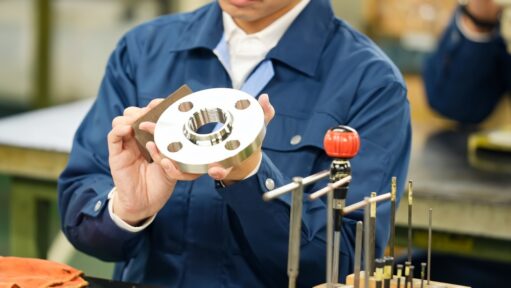
When Precision Engineering Becomes a Tailor’s Workshop
The SME specialises in precision machining: turning, milling and boring. It has CNC machines, CAD/CAM expertise and dimensional inspection equipment. It is ISO 9001 certified.
But what struck me most was something else: it can produce even a single part, without necessarily requiring a minimum order quantity.
It made me think of a tailor. When I buy a ready-made suit, I compare styles and prices. If I want one made to measure, I look for someone who can understand a specific request and deliver it properly.
The same principle applies to some industrial equipment manufacturers. They do not need thousands of identical components, but just a few parts—sometimes only one—with complex geometries, tight tolerances and the opportunity to speak directly with the people producing them.
In such cases, a relatively small company, supported by technology and sound organisation, can turn its size into a competitive advantage.
High Volumes, Small Batches and Price Competition
These two production models are not mutually exclusive. Large orders provide continuity and help absorb fixed costs. Specialist machining makes the most of technical expertise and flexibility, provided that prices also cover programming, machine setup and inspection. Producing a single part is therefore not automatically more profitable than series production.
However, small-batch manufacturing can be less exposed to price-based competition. Moving production to distant countries involves initial and logistics costs that are easier to justify when volumes are high. For some European customers, strategic concerns about competition also come into play. With complex components, precision, delivery times and technical collaboration may therefore matter more than the price of an individual part.
The Sales Challenge: Finding the Right Customers
For a company with these characteristics, finding new customers should not mean sending the same company presentation to hundreds of machinery manufacturers.
The task is to identify businesses that genuinely need this production model: special-purpose machinery manufacturers, companies that build to order, or manufacturers requiring small quantities of complex components and rigorous quality checks.
Choosing a country with a large or growing market is not enough. We need to understand which companies within that market have requirements that match what we do best.
Databases, digital tools and artificial intelligence can help us identify them. But turning information into real business opportunities still requires technical knowledge and a structured sales approach.
Small Does Not Necessarily Mean Weak
Being small brings real limitations: fewer financial and sales resources, and less capacity to invest and take risks. Yet in some market segments, small size combined with specialist expertise can be a strength.
Not every SME needs to adopt a bespoke manufacturing model. But every company should ask itself: In which activities are we genuinely difficult to replace? Are we looking for customers who recognise the value of that difference?
Answering these questions can be the starting point for an international business development plan.
Pier Paolo Galbusera